10 Ways to Stop Yelling at Your Child (That Actually Work)
We've all been there. Your child refuses to put on shoes for the third time, or they're having a meltdown in the grocery store, and suddenly you hear yourself yelling. Again. The guilt hits immediately, followed by that familiar thought: "I swore I wouldn't be a yelling parent."
Here's the truth: yelling is a normal human response to stress and overwhelm. It doesn't make you a bad parent. But if you're ready to break the cycle and find calmer ways to connect with your child, you're in the right place. These ten strategies are backed by child development research and tested by real parents in the trenches.
THE IMMEDIATE CIRCUIT BREAKERS
**1. Use the STOP technique** When you feel the yell building, literally say "STOP" in your head (or out loud). Take a Step back, Take a breath, Observe what's happening, and Proceed mindfully. This four-second pause can completely change your response.
**2. Lower your voice instead of raising it** This counterintuitive approach works like magic. When you feel the urge to yell, whisper instead. Your child will naturally lean in to hear you, instantly shifting the energy in the room. It's hard to stay escalated when someone is speaking softly.
**3. Name your feeling out loud** "I'm feeling really frustrated right now, and I need a minute to calm down." This models emotional regulation for your child while giving you permission to pause. Children actually respond better when they understand what's driving your behavior.
**4. Create a family code word** Choose a silly word like "pineapple" or "marshmallow" that anyone can say when emotions are running high. This becomes your family's signal to reset and try again. It works because it interrupts the escalation pattern with something unexpected.
BUILDING YOUR LONG-TERM TOOLKIT
**5. Identify your yelling triggers** Most parents yell in predictable situations: morning rush, bedtime battles, or when they're hungry and tired. Notice your patterns. Are you more likely to yell at 5 PM when everyone's cranky? Plan ahead with snacks, earlier bedtime routines, or by asking for backup during your vulnerable times.
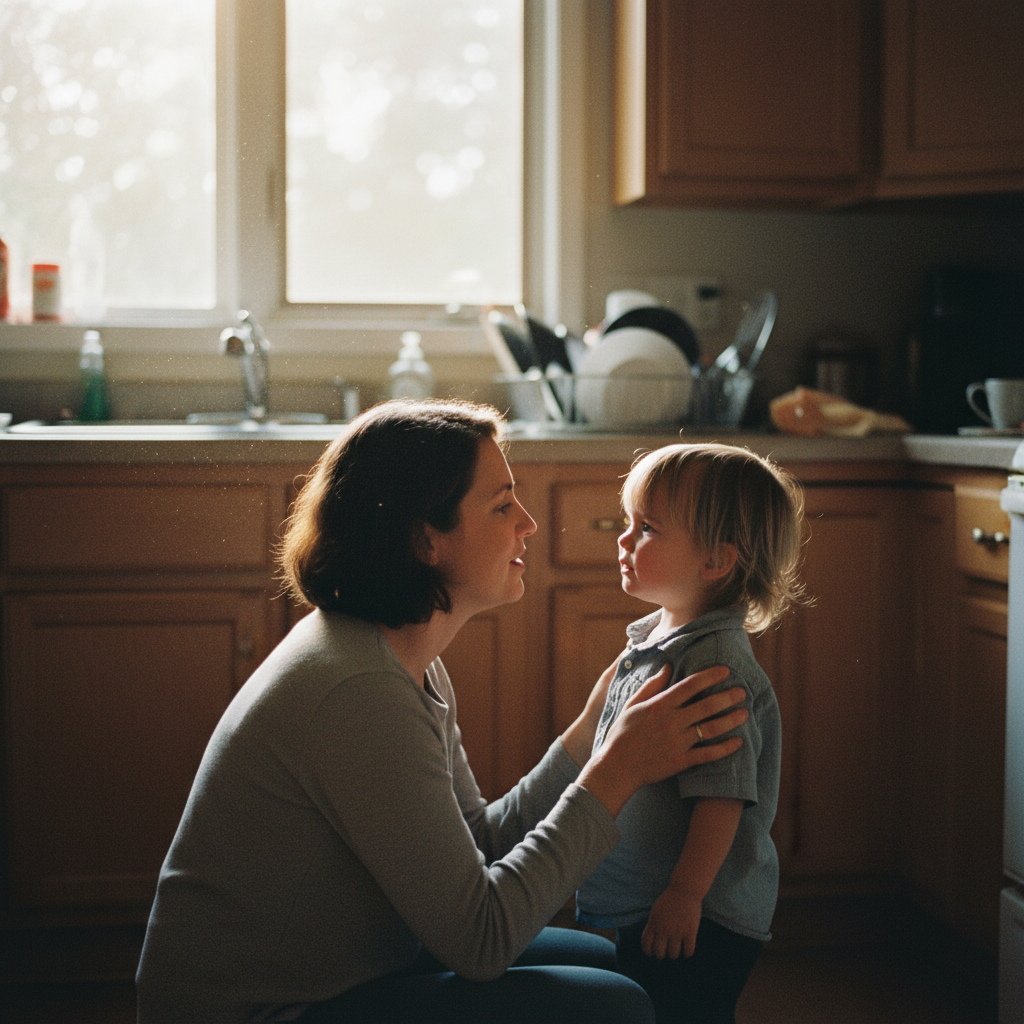
**6. Practice repair immediately** When you do yell (and you will), repair the relationship quickly. Get down to your child's level and say, "I raised my voice, and that wasn't okay. You deserve to be spoken to with respect, even when I'm frustrated." This teaches them that mistakes can be fixed and relationships can heal. The Famsies Repair Kit offers scripts and strategies to make these conversations feel natural and authentic.
**7. Build connection before correction** Children are more likely to cooperate when they feel connected to you. Before jumping into problem-solving mode, try acknowledging their experience: "You're really disappointed we have to leave the park." This validation often dissolves resistance faster than any consequence.
**8. Establish clear, consistent routines** Many yelling episodes happen during transitions or when expectations aren't clear. Strong routines eliminate the need for constant reminders and negotiations. Whether it's a visual bedtime chart or a consistent morning sequence, predictability reduces everyone's stress levels.
MAKING IT SUSTAINABLE
**9. Take care of your basic needs** You're more likely to yell when you're hungry, tired, or overwhelmed. This isn't selfish—it's strategic. Prioritize sleep, eat regular meals, and ask for help when you need it. Consider connecting with other parents in supportive communities where you can share strategies and normalize the challenges.
**10. Practice self-compassion** Changing ingrained patterns takes time. You'll have setbacks, and that's completely normal. Talk to yourself the way you'd talk to a good friend facing the same challenge. Remember that your awareness and effort to change already make you a thoughtful parent.
"The goal isn't to be a perfect parent who never raises their voice. The goal is to be a parent who repairs, learns, and keeps trying."
Implementing these strategies takes practice, but the payoff is enormous. When you stop yelling, you're not just changing your child's experience—you're modeling emotional regulation, building trust, and creating the calm, connected home environment you've always wanted.
Remember, if you slip up tomorrow (and you might), you have tools to repair and reset. Your child doesn't need a perfect parent—they need a parent who's committed to growing alongside them. And that's exactly what you're doing by being here, reading this, and choosing connection over control.
Start with just one strategy that resonates with you. Small changes create big shifts, and every calm interaction is building the foundation for a stronger relationship with your child.